
Last verified 2026-09-27 by ReviewGamers Editorial
“Two hours, fourteen days” is the version of Steam’s refund policy most people repeat, but Valve’s own refund page sets out more detail than that single line covers.
The standard rule, precisely
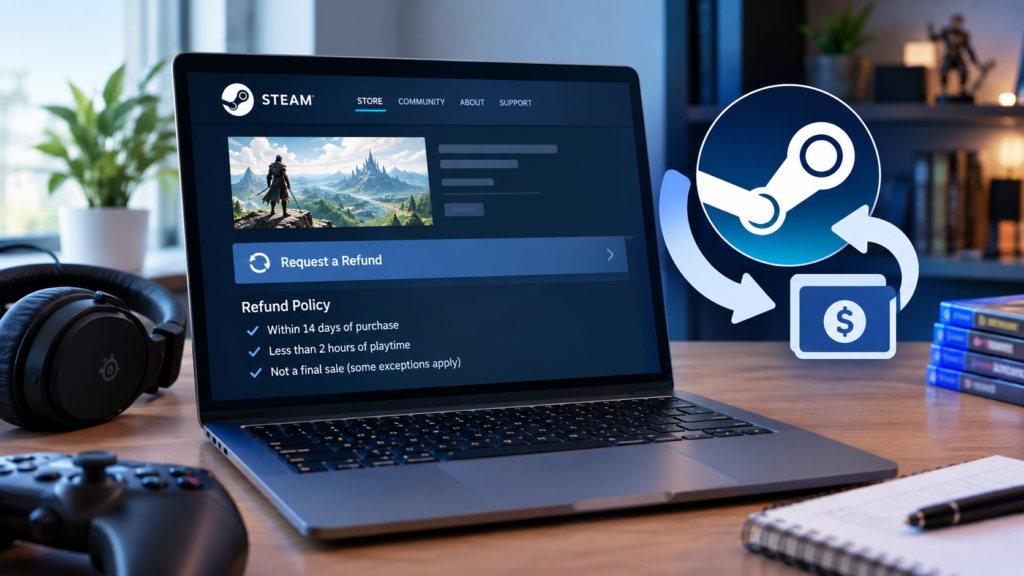
A purchase qualifies for an automatic refund when it is requested within 14 days of the purchase date and has under 2 hours of total recorded playtime. Both conditions have to be true together — meeting one and not the other does not qualify under the standard rule.
The 14 days counts from purchase, not from first launch
The clock starts at the purchase date, not the day you actually installed or first opened the game. A game bought two weeks ago and only opened yesterday is still outside the standard window, even with almost no playtime logged.
DLC has its own version of the same rule
Add-on content purchased on Steam is refundable within 14 days of that DLC’s own purchase, provided the base game has under 2 hours of playtime accumulated since the DLC was bought, and provided the DLC itself has not been consumed, modified or transferred. DLC that grants a permanent, already-used effect can fall outside this even within the time window.
Outside the window is not automatically a dead end
Valve’s own policy states that requests outside the standard 2-hour/14-day window are still reviewed, just not automatically approved. A short amount of extra playtime or a few days past the deadline does not disqualify a request from being submitted — it moves the decision from automatic to a manual review Valve makes case by case.
The takeaway
Steam’s refund rule is really two matching conditions, not one: 14 days from purchase and under 2 hours played, checked together. DLC follows a version of the same rule tied to its own purchase date, and a request outside either limit is still worth submitting since Valve reviews those individually rather than rejecting them outright.