
Last verified 2026-09-25 by ReviewGamers Editorial
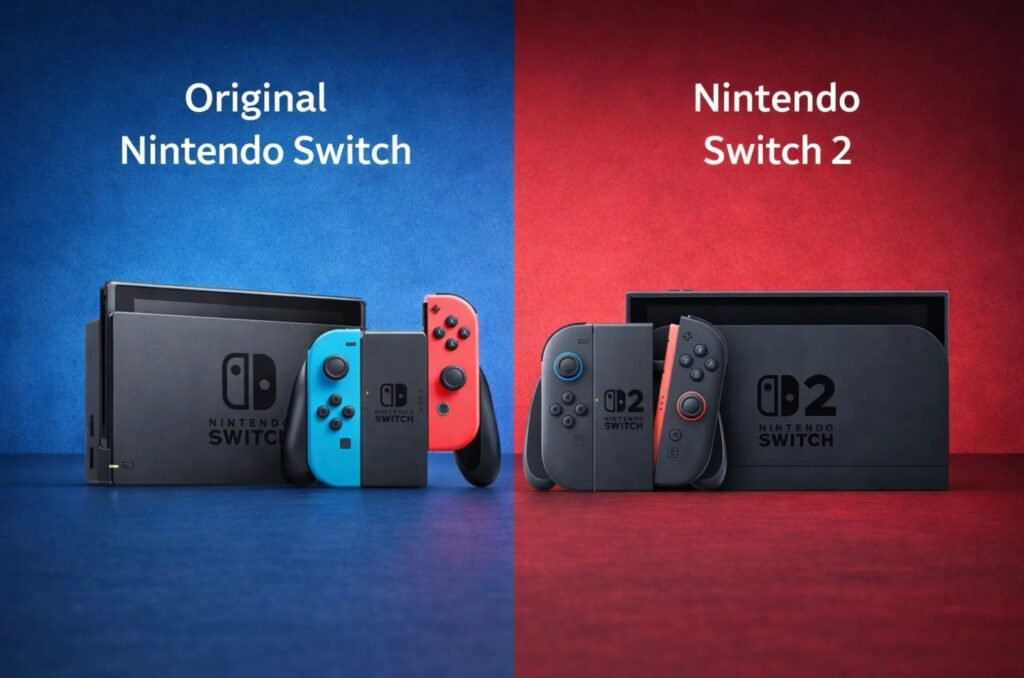
The original Switch didn’t stop being a legitimate purchase the moment Switch 2 launched — it shifted role, from Nintendo’s flagship to its budget option. Whether that role fits you depends on a few specific questions, not just which console is newer.
The honest starting point: it’s now the budget tier
Nintendo has continued selling the original Switch alongside Switch 2 rather than discontinuing it, positioning it explicitly as the lower-cost entry point into the ecosystem. That’s a deliberate strategy, not a sign the older hardware is being phased out immediately — plenty of console generations run two hardware tiers side by side for exactly this reason.
The question that actually matters: what do you want to play
Since nearly all of the original Switch’s library also works on Switch 2, the deciding factor isn’t “which console has better games” — both give you access to essentially the same software library. The real question is whether any Switch 2-exclusive titles or the performance/features unique to the newer hardware matter enough to you to justify the price difference.
Where the original Switch still makes clear sense
If your budget is the primary constraint, or if the games you want to play run fine on original Switch hardware without needing Switch 2-specific enhancements, buying the older console is a genuinely reasonable choice rather than a compromise — you’re not locked out of the shared library, and you save money on hardware you don’t strictly need.
Where Switch 2 is worth the extra cost
If you specifically want Switch 2-exclusive titles, the free performance/graphics upgrades some existing games received on the newer hardware (Super Mario Odyssey and Splatoon 3 among them), or GameCube Classics access through Switch Online’s Expansion Pack tier — benefits tied specifically to the newer hardware — the price difference is buying you real, specific features rather than just a newer label.
A practical way to decide
Ask directly: is there a Switch 2-exclusive game you already know you want, or do the hardware-specific upgrades matter to you? If yes, the newer console earns its price premium. If your answer is “I just want to play Switch games,” the original console still does that job completely, at a lower cost, with the same library.
The practical takeaway
Buying an original Switch in 2026 isn’t settling for outdated hardware — it’s a legitimate budget-tier choice Nintendo itself continues to support, and it remains the right call for anyone whose actual answer to “what do I want to play” doesn’t require anything Switch 2-specific.